Manufacturing · Service & engineering

Which machine fails next is often already written in your service reports.

Predictive service that starts with your service data instead of new hardware. The AI shows the risk per machine, and your service team decides.

Installed base risk listnext 3 months
  1. Albrecht PlasticsBZ-650 · SN 61104 · spindle bearinghigh
  2. Holtkamp PrecisionBZ-650 · SN 61187 · coolant pumphigh
  3. Steinmann EnclosuresBZ-480 · SN 48233 · tool changermedium
Service report 2019-0412scan, free text

Site visit, BZ-650, SN 61104

Customer reports spindle noise at high speed.

Front bearing has play, temp. raisedSymptom

Spindle bearing replaced, kit SL-65 fittedAction

Test run ok, customer informed.

Where time goes today.

  1. 81 %

    Plenty of interest, little on offer

    81 % of the machine builders surveyed were working intensively on predictive maintenance, yet only 11 % had a full offering on the market. The step from pilot to a service customers pay for is missing.

    VDMA / Roland Berger, Predictive Maintenance 2017
  2. 27 h

    Downtime your customers feel

    That is how much unplanned downtime a large plant loses per month on average. The figure covers large industrial companies, but it shows what your customers would pay a predictive service to avoid.

    Siemens, The True Cost of Downtime 2024
  3. almost 90 %

    Customer needs stay unclear

    Almost 90 % of the machine builders surveyed admitted gaps in understanding what their customers need. Yet their own service reports show what keeps coming up on which machine.

    VDMA / Roland Berger, Predictive Maintenance 2017

One case, step by step.

Machine recordBZ-650 · SN 61104
  1. Service reports14 visits since 2017linked
  2. Spare-part orders9 items, latest 05/2026linked
  3. Operating hours31,400 h at last visitlinked
  4. Warranty cases1 case, 2018check

Service data comes together per serial number.

Service reports, tickets, spare-part orders, warranty cases and operating hours from your ERP and ticketing system end up in one place, sorted by machine. No new hardware at the customer site.

Your team decides

Which sources and which time span go in.

Report 2019-0412structured
MachineBZ-650 · SN 61104
ComponentSpindle, front bearing
SymptomRunning noise, bearing play, raised temperature
CauseBearing wear
ActionBearing kit SL-65 replaced
Check sample

AI turns free text into cases you can analyse.

Even old, scanned reports full of technician shorthand are read and broken down into symptom, component, cause and action. Spotting repeat failures runs on the same groundwork.

Your team decides

Your technicians spot-check samples and correct the mapping.

Risk BZ-65038 machines
  1. SN 61104 · spindle bearing31,400 h, bearing last replaced at 18,000 hhigh
  2. SN 61187 · coolant pump3 pressure faults in 12 monthshigh
  3. Spindle bearing intervalInspect every 12,000 h instead of after failuresuggestion

A risk list across your installed base.

Failure patterns per series, component and running time produce a list of machines at elevated risk, each with its reasoning. Plus suggestions for maintenance intervals and parts demand.

Your team decides

Which assessment holds up and where the team knows better.

Field service planningweek 46
  • Albrecht PlasticsTueCombine bearing check with serviceTechnician S. Vogt, parts kit SL-65scheduled
  • Holtkamp PrecisionWedQuote for pump replacementDraft with the head of serviceApproval

The proposal lands where your service plans.

The risk list goes into your ticketing system or field service planning, with draft maintenance proposals or quotes for the customer. Where the data shows it pays off, you add sensors selectively.

Your team decides

Which customer gets which visit or which offer.

What it delivers and what it connects to.

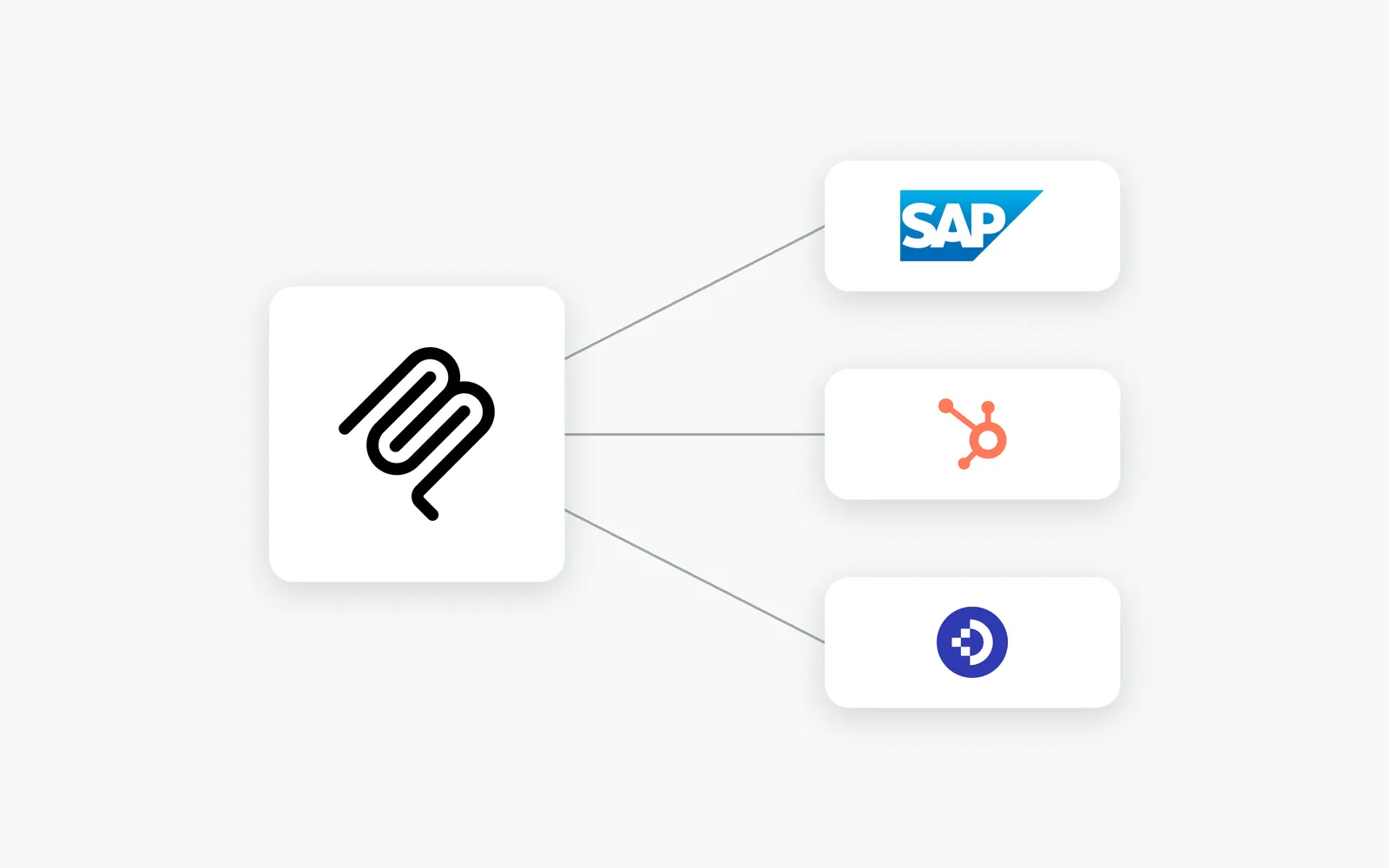
Works with the systems you already use

Who does what.

What the AI takes on

  • Ranks visits by failure risk, with reasons from the history
  • Suggests which customers to visit first
  • Lists the parts that belong in the van
  • Bundles checks with maintenance that is already planned

What your team decides · Service

  • Reviews and corrects the assessment
  • Decides on the visit, the technician and the date
  • Sets which customer comes first

What the AI takes on

  • Turns the risk list into draft quotes for maintenance and parts kits
  • Drafts service contracts with fitting intervals
  • Backs each draft with the visits to that machine

What your team decides · Sales

  • Decides which offer a customer gets
  • Sets price and terms
  • Talks to the customer

What the AI takes on

  • Shows weak points in the field per component
  • Backs every pattern with the affected serial numbers
  • Separates series, running times and operating conditions

What your team decides · Engineering

  • Judges whether a pattern has a design cause
  • Decides on changes to a part or a series
  • Sets whether machines in the field get retrofitted

Who it fits.

A good fit if

  • Your machines run at many customer sites
  • Your own service team does the visits and writes the reports
  • Visits can be tied to a serial number or a customer
  • You sell maintenance or spare parts yourself

Less of a fit if

  • There are only a few visits a year
  • Partners handle service and you do not get their reports
  • Visits cannot be tied to a machine

What it costs

Fixed prices, clear steps.

You know up front what each step costs and what it delivers.

  • AI strategy

    €1,990plus VAT

    Fixed price

    • One workshop day on real cases
    • A calculation with your figures for the best use cases
    • A paper for management and shareholders

    Money-back guarantee: three use cases that pay back within 12 months on paper, with your figures, or your money back.

  • Pilot with one use case

    from €5,000plus VAT

    Fixed price

    • On your data, in your process
    • Acceptance criteria agreed in writing

All prices net. Operation afterwards is from 20% of the project price a year, cancellable monthly. The code and the data are yours.

Further reading

All posts

Frequent questions

Common questions about it.

The questions that almost always come up about this use case.

Do we need sensors for this?

Not to get started. Without new sensors we work from service reports, tickets, ERP, spare parts and operating hours. That shows which machines and components carry elevated risk and why, with timing roughly in weeks to months. It needs no hardware and no data release from your customer, and it starts with the history you already have. Sensors, by contrast, measure the condition of a single machine and pin down timing more precisely, but they need hardware, a gateway, the operator's sign-off and several months of readings first. One does not rule out the other: your service data shows which components are worth fitting with sensors.

How accurate is the prediction?

It does not name a failure date. It gives a risk per machine and component for the coming weeks to months, backed by the history. Sudden failures with no track record are out of its reach. How reliable the list is depends on how many service visits are documented per series, and you see that before the project starts.

What data do we need?

To start, service reports or tickets from roughly the last 12 to 24 months are enough, each with a date, a serial or customer number and the report text, free text and scans included. An export from your ERP, CRM or Excel does the job. An interface only becomes necessary once new cases should flow in continuously. More helps: spare-part orders, warranty cases and operating hours sharpen the result, and the more visits per series, the more reliable the list.

Do we need data from our customers?

No. The start uses data you already own as the manufacturer. Fault logs your technicians read out of the controls on site are added if you have them. An ongoing data release from the customer only becomes necessary if you add sensors later.

How is this different from spotting repeat failures?

Both run on the same structured service reports but ask a different question. Spotting repeat failures looks back: which fault keeps coming up and why, for quality and engineering. Predictive service looks ahead: which machines at your customers are next and what to offer them, for the head of service.

The next step

Let us find out where AI pays off for you.

30 minutes, free and without obligation.